Showing posts with label Keita Amemiya. Show all posts

Friday, May 27, 2016

Mechanical Violator Hakaider (1995)

destroyhakaider

If this peace is fictitious I shall destroy it.

In a distant future, war has reduced human civilization to an irradiated wasteland. For many decades people struggled to survive in a world where Man lives by his base instincts. Until a being named Gurjev (Yasuaki Honda) descended to Jerusalem. Seraphim in appearance, but with a nature belying something else entirely, Gurjev along with his android disciple Michael (Kazuhiko Inoue) ushered in a utopia with advanced technology and equality. This angelic socialist renamed Jerusalem to Jesus Town and brought all mankind together. All seems right in the world until adventurers uncover a prison confining a terrible menace. Hakaider (Dai Matsumoto), the one who destroys to bring justice has awakened. Blazing a trail of unspeakable carnage he heads toward Jesus Town to burn it to ash. What is Hakaider seeking? What is the reason behind this violence? Who is to say there is one?

Hakkaider
 
90s Japanese box art!!!!

Created by Bandai and Toei, and directed by Keita Amemiya (GARO, Kamen Rider, Onimusha), Mechanical Violator Hakaider was released in Japan in 1995 and is a spin-off of the Android Kikaider series created by the father of Kamen Rider Shotaro Ishinomori. In the original Kikaider series, Hakaider is actually the villain and is something of the Cain to Kikaider's Abel. However, Hakaider became so popular in his own right that he earned his own toy line and movie. And what a BADASS movie it is. Normally I shy away from live-action adaptations and re-imaginings, but let me tell you that Mechanical Violator Hakaider is one of the best. True the movie doesn't tie into the Kikaider series and in fact, Hakaider is the only commonality between this film and the source material. Everything else from the setting to the tone, to the action and characterization are quite different. This is a post apocalypse, but while most of the world has been destroyed, there's an unsettling sense of routine, of easiness about the whole affair. The people of Jesus Town are happy and everyone is equal in that "this is not what nature intended" way that only happens in a dystopia. The people feed on Gurjev's every word and regardless of race or gender everyone behaves like sheep and are even dressed in white. Gurjev even refers to the people as his children and even his arc android worships him. The set-up is so disturbing it's fantastic.

Hakaider
 
A look that will make your blood run cold.

Who is to say we're better off with our "hero?" Hakaider is not one of the good guys. On his best day he's an anti-hero, but he seems closer to a villain protagonist. Hakaider was sealed away for a reason and when he's unleashed you better hide or get the hell out of his way. Hakaider leaves a pile of bodies wherever he goes and he's almost unstoppable. Everything about him from the way he moves to the way he fights is very imposing and while his human guise isn't as overtly unsettling, you can still feel something powerful behind it. Maybe Hakaider's backstory indicates there's more to him than murder. Maybe he's just a ruthless killing machine and the future is filled with people who need killing. Even after watching the film I can't really say for sure.

habike
 
Motorcycles are forever.

If you're at all familiar with Keita Amemiya's work (GARO, Kiba Gaiden, etc.) you know he's a fantastic director that makes superb use of practical effects and minimalist acting. There's only one brief scene where computer animation is used, but the entirety of the action scenes use old school movie magic: pyro, blanks, dummies, stop motion, hotblooded stuntmen, camera tricks and so forth to draw you in. It's a different experience from today's CG fests. You really feel like you're screeching down a highway in a race of life or death or staring down Gurjev's robosapien minions in a dark, decrepit alleyway. There's so much 90s badassery that even Hakaider's motorcycle looks ominous. There is a rebel group (isn't there always) that seek to bring down Gurjev and while they're mostly here for exposition, they all had different personalities and habits that defined them.

hakaidervision
 
Gorgeous cinematography.

Kaoru (Mai Hosho) the leader of the rebels is a particularly interesting character who has visions of the future. The message behind these visions are open to interpretation. These scenes are short, but there is a lot of fantastic imagery here including chains, crosses, wings, and an enigmatic black knight. This is the part of the review where I tell you the film isn't perfect.

HakaCV
 
Not perfect, but close enough.

The film isn't perfect. Some of the techniques are dated. The film is more than 20 years old after all and if 90s movies aren't your thing this one probably won't win you over. The last-last battle does feel unnecessary in that BvS kind of way, and Kaoru's visions while interesting often appear out of nowhere. Distribution wise I should note the film is a bit difficult to find, curious as four different versions were released. There's a Japanese VHS, an English VHS, a Japanese DVD Director's Cut, and an English DVD Director's Cut. From what I've found the only way to get Mechanical Violator Hakaider is in a set. The film is only 80 minutes long which is fine for an action movie. It doesn't make any big promises it can't keep, it gets you in and out, and it leaves you wanting more in a good way. You won't find a perfect action movie, but you'll find a very entertaining and often overlooked toku classic.

Mechanical Violator Hakaider on Amazon.


Wednesday, November 12, 2014

Kiba Gaiden (2011)

The Dark Knight Kiba

Released in theaters in November 2011, Kiba Gaiden takes place before the last three episodes of the original GARO and is centered on series antagonist Barago (The Dark Knight Kiba) and explores Barago's origins and his call to darkness. Due to this movie's place in the Garo canon it is highly advised that one watch the original series then the gaiden entry as some spoilers are inevitable. I'll start by saying in many ways, you could call this film Amemiya's tour de force as many of the elements in GARO and Garo: Makai Senki are not only on full display but are taken to some very impressive heights. Amemiya did so much, with very little, in a very short amount of time. The results are so well-done and wonderfully imaginative that I found myself consistently impressed throughout.


Life and death are simple concepts.

The film opens with Barago's soliloquy about the darkness in his heart and whether a light was ever there to begin with. The scene then shifts to Amemiya's signature brush work where we see a Horror attack a woman before being slain by Kiba. We are then taken to a dark room which uses a blend of western gothic ornaments with makai symbols where the three main characters in this film take center stage and it is in this scene and many others like it where Amemiya shows how good he is as both the creator of the property and this series. He doesn't spend a large amount of time introducing our characters because with the exception of maybe Elda, we know them from the series. Amemiya also carries over the design elements of the original series, keeping all the franchise's aesthetics in place. In addition, the absence of visible light sources, the presence of dark colors, and sharp almost sinister designs of the objects in the room give the film's opening location a very oppressive atmosphere which made Kaoru's imprisonment feel every bit as discomforting to this viewer as it was to Kaoru herself. Perhaps even more so because while Kaoru is in disbelief that someone closest to her is threatening her life, I was fully aware at this point that Barago was a monster. Of course he wasn't always this way.


Childhood

Barago recounts his childhood which I found added to not only his character development but also Amemiya's creativity. Contrary to most villains Barago did not have a tragic past. Rather his childhood was mostly an idyllic one and very similar to most families in Makai, his mother being a Makai Priest and his father a Makai Knight, and like most children Barago was trained to be strong so as to one day become a Makai Knight himself.


She is more precious to him than any other.

People deal with loss in different ways and when Barago's mother took ill and was claimed by a Horror soon thereafter, in his mind it was because neither he nor his father were strong enough to protect her. Once Barago lost his father it simply meant his father was weak. Barago's psychological approach to dealing with pain and loss revolves around his perception of power and the applications thereof.


Barago meets Messiah, The Origin of All Horrors

I found Barago's character and indeed the development thereof quite different from many other villains because initially he doesn't seek power just for the sake of it, nor does he subscribe to the "survival of the fittest" or "might makes right" theology of villainy. Power is simply everything and the natural objective of everyone who calls themselves a Makai Knight. Barago's quest for power leads him to break many Makai rules and delve into his share of taboos such as seeking out the power of darkness and even Messiah, both of which being the ultimate evils in Makai teachings. What I also found captivating about Barago is his lack of hesitation when speaking in absolutes. Barago is hands down one of the most powerful characters in Garo if not the most powerful, and his willingness to adopt a mentality of absolutes is rooted in his convictions that anything can be accomplished with strength. Even so, he never boasts about his strength and recalls his accomplishments as mere matters of fact.


He is a nightmare.

The movie has a short, but very effective montage that shows us how much stronger Kiba has gotten overtime. Even if you haven't seen the series, it's easy to see why he is a nightmare to Horrors and Makai Knights alike, demolishing his enemies with unrelenting force and even devouring them and taking their strength for his own. Kiba's theme is played during this montage for that extra touch of badassery and is almost spine-chilling. Whether he is up against Horrors or Makai Knights, Kiba is unfettered, brutal power, and doesn't really have to do much to completely overwhelm his opponent. That is until he faces down Garo and the struggle between the two is a soul-shattering showdown so epic, so over the top the battle alone makes the film a must see.


Dark reflections.

The acting in the movie is mostly good. I say mostly because Mika Hijii who plays Kaoru in both the series and this film doesn't appear to bring her A game. It's possible that she wasn't given much to work with or just didn't have the most screen-time to be anything more than a damsel in distress but I didn't feel as though she gave a believable performance here. I suppose Kaoru as a character is so taken aback by Barago's betrayal that she can't wrap her head around everything that's going on but I just didn't really feel Hijii in this role.


Darker designs.

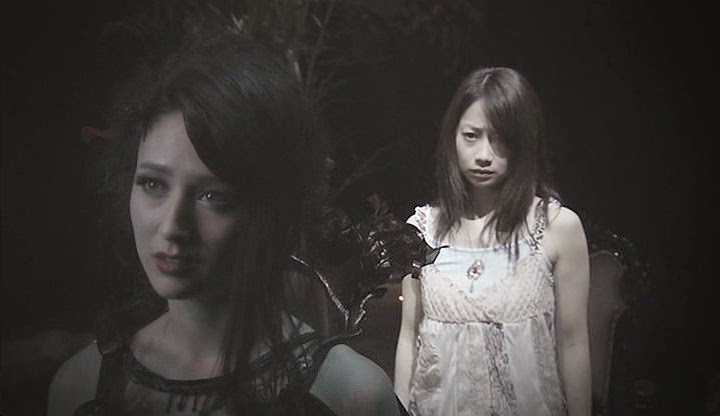
Leah Dizon plays Elda, Barago's right hand. I felt she received a decent amount of screen-time and didn't phone in her performance at any point I could notice. While her character type was cliche I still remember her quite vividly. I felt that not only was she a good actress but I also have an appreciation for Amemiya for giving her a fully fleshed out and believable origin in her own right which made her feel like a round character.


Stealing the show. Like a boss.

Singer/actor/guitarist Masaki Kyomoto steals the show as Barago. Kyomoto is no stranger to acting as he's been in the business since the 1980s. Much like in Garo where he played two characters, he brings that duality to his role here. Kyomoto portrays a character that is affable and forthcoming, but at the same-time he's very good at keeping Barago's cruelty firmly in mind. Even when he's being gracious there is a cold, oppressive nature about him. When he treats Kaoru or Elda as people it's done in a way where he seems to be merely humoring them even if it's not overt. Kiyomoto has a soft but masculine voice which is very attention getting and I found myself hanging onto his every word. He has a strong onscreen presence and makes very subtle use of his facial expressions and eyes, the latter technique I found particularly captivating because he never seems to look at the other characters even when he's making eye contact with them. It seems as though he's looking through someone, or rather he looks passed them, his eyes always on his ultimate goal and giving no pause to anything in between.


The Lightning Baron will strike down evil.

The film's epic orchestrated score comes across particularly well during the fight scenes. One especially noteworthy piece plays during the battle between Garo and Kiba which makes the battle feel and sound every bit as monumental as it looks. Kiba's theme is a really intense, dark, horrifying piece that makes an excellent use of only a small handful of instruments with some very audible trumpets which is fitting given what trumpets sometimes symbolize. One piece that stood out for me just as much, if not even more than Kiba's theme is the theme of Barago. For all his power and evil, Barago strikes me as a sad character if not in nature then certainly in circumstance and his theme is a very soft, almost quiet piece which mixes violins and pianos and while there's a sinister tone in the reverb I found the theme tragic and moving overall.


Was there ever light in that heart?

Kiba Gaiden was a very enjoyable film. I didn't think a gaiden about Garo's antagonist would provide so much characterization and such epic thrills when I first heard about it. It's clear that Keita Amemiya doesn't phone it in and I felt he really outdid himself with Kiba Gaiden. While it's not the longest film (run-time is less than 60 mins.) it's definitely unique and more entertaining than many films I've seen that cross the two hour mark. I felt it's also one of the stronger GARO films and with a tokusatsu this good that says quite a bit. There are some interesting twists and shocking turns in this movie which combined with great acting, fantastic fight scenes, and a powerful ending really left an impression. Definite must see.

Sunday, November 2, 2014

GARO (2005 - 2006)

GARO The Golden Knight

Since ancient times creatures called Horrors have preyed on mankind. Possessing terrible strength, magical powers, and the ability to shape-shift, Horrors have been the stuff of nightmares. Mankind's only defense against these creatures are the Makai Knights; human beings who possess superb martial arts skills and powerful magic. Over the centuries, the Makai Knights have been successful in repelling these monsters, and to the people of today Horrors and Makai Knights are just obscure myths. However, the threat of Horrors is very much real and now as they stand on the edge of complete annihilation, they will call on Messiah the Origin of All Horrors to exterminate mankind forever. Only one man can stop the Horrors from bringing about their terrible plan. That man is Saejima Kouga. That man is Garo The Golden Knight.


Name: Saejima Kouga, Occupation: Undisputed BADASS

Created in 2005 by Keita Amemiya, GARO is a dark fantasy set in the modern era. More so than its successive series, Garo is a masterful blend of horror, fantasy, drama, and martial arts that creates a tokusatsu that is on par with many Kamen Rider series, and speaking as someone who feels Kamen Rider is the greatest tokusatsu out there that is no small statement. The cast, presentation, and writing go a long way in making this show standout. There is a lot of world building that uses small details like introducing terms such as Makai Knights, hoshi, madou fire, watchdogs and so forth to gradually and effectively build a captivating horror fantasy. I thought taking in all the complex terms and rules of this world would be daunting at first but by the second or third episode I knew a great deal about this world and never felt lost as the series went on. The show follows Saejima Kouga (Garo) who is played by Hiroki Konishi who seems to be channeling his inner-Blade era Wesley Snipes. We get the feeling very early on that despite Kouga's archetypal construction there's more to his character than he lets on. While he's mostly a reserved badass, Kouga usually has a witty quip or cold remark which in addition to suiting a particular situation, also goes a long way in exploring his hidden depths.


Kouga, Gonza, and Kaoru

When he's not cutting down Horrors, Kouga isn't particularly outspoken and I feel that Konishi does an absolutely amazing job with this character in communicating his thoughts and feelings with non-verbals. Whether it's the speed of his gait, his posture, facial expressions, or just certain glares or glances of his eyes, Konishi's acting enables Kouga to speak the most when he's not saying anything at all. It's a quiet performance that's hardly silent. As a character Kouga is all business and has little interest in anything outside of his duties as a Makai Knight and this either by whole or in part has stunted how he associates with other people. In doing so, it builds a believable wall between our male and female leads.


Sleeping Beauty

Played by Mika Hijii, Kaoru Mitsuki serves as our female lead who strangely enough, is effective because she's completely average. Kaoru is a starving artist who is trying to achieve her dream of becoming a world class painter and has to take odd jobs in order to eat and pay her rent to the best of her ability. At her core she's a single woman trying to make it out here. She has an unfortunate encounter with a Horror and while Garo prevents Kaoru from being killed, he doesn't technically save her life. Kaoru gets stained with the blood of a Horror which infects her body and attracts other Horror to her like a beacon. And even if they don't kill her, in 100 days she'll turn into a Horror herself so it goes without saying Kaoru's days are numbered. What's compelling is that despite being hunted by these monsters Kaoru refuses to give up. She keeps aiming for her dream while at the same-time, trying to unravel the mystery of her father's final masterpiece which is an unfinished picture book of a strangely familiar figure in golden armor.


Character development. We don't have this in the states.

Kaoru builds a believable, albeit predictable romance subplot with Kouga which I actually didn't mind much to my own surprise. It doesn't feel shoehorned into the plot and the relationship is a very slowburn as Kouga's character arc has to take him from the person he is i.e. someone who doesn't care about forming bonds and is solely dedicated to being a Makai Knight, to the person he needs to be i.e. someone who is compassionate and understands that the monsters in his own heart are every bit as dangerous as the Horrors themselves. I point this out because it is Kouga's relationship with Kaoru that forces him to reflect on who he is and why he is and opens the door to further characterization and bits about his background. As the story progresses, we encounter other characters including rival Makai Knights.


Suzumura Rei The Silver Knight

Played by Dustz lead singer Ray Fujita, Suzumura Rei serves as Kouga's bitter rival, foil, and unwilling ally depending on the situation and his mood which is liable to change in a heartbeat. Rei can best be described as ruthlessly efficient as he'll cut down Horrors (and anyone tainted by Horrors) with merciless ferocity. He develops an interest in Kaoru that some times takes a left turn into creepy land, and he also holds a grudge against the Golden Knight for reasons known only to himself. The script (and the franchise as a whole) gets a lot of mileage out of Rei's character right from his introduction because it shows us that Kouga isn't the only Makai Knight and there are others fighting against the Horrors. It also shows us that different Makai Knights have different regions of the world they're supposed to defend and they're not actually supposed to crossover into each other's jurisdiction. On top of that, the inclusion of Rei helps the plot move closer to the larger conflict.


Power Up!!

As per the norm with tokusatsu the villains of the series tend to be your Monster of the Week variety starting off. Kouga receives assignments from the Watchdogs (his bosses) and intel about Horrors while other times he must hunt them on his own with absolutely no information to go on. These Horrors lure humans often targeting them based on their character flaw such as greed or taking advantage of people's desperation or regret on other occasions. Essentially if there's someone out there that has a psychological, emotional, or spiritual weakness there's a Horror that will prey on them. Some of the scenarios in which people fall victim to Horrors makes perfect sense such as when a Horror poses as a doctor and kills people in his private hospital because it would go unnoticed if there was a mishap on the operating table. Other scenarios do seem contrived such as when one Horror poses as a broker and attacks the people she meets. But she meets people out in the opening, at night. Who meets a broker in the dead of night? I admit these are minor gripes and this is typical of most series of this kind. It's not a jab at the convention but I do wish the reasoning behind some encounters was more creative.


The Dark Knight Returns

Around the halfway point Kouga learns that his father's nemesis Barago is not only alive but in his very city. The conflict between the two not only turns the world of Garo upside down but brings the city to its knees. The action is top notch due in large part to excellent choreography, some creative wire work, and relatively simple use of CG except for the most over the top battles. One of the things I appreciated about this Garo and a major advantage it has over its successive sequels is that it uses costumed stunt men for most of its fight scenes. I feel the action is more effective in this manner not only because its the tradition of tokusatsu but also because by not using CG, the battles look more real and the combat is a lot more interesting because even with the use of wires, there is still a guy in a suit executing these moves rather than a CG model. It also says a lot about the presentation and the remarkable level of care put into this series because Horrors and armor worn by the Makai Knights all look really complicated so there was certainly a lot of effort that went into building this world.


Garo is ready for action!

When CG is used it's done where it makes sense such as in the creation of some two story tall Horrors and fight scenes which could not have been done any other way. Perhaps the most jaw-dropping use of CG combined with live action comes during the series climax which I won't spoil but I will say it was the most stylish, action packed finish I've seen this side of Karas. Simply put, Platinum wishes they made something this over the top.


"He fights battles and doesn't afraid of anything."

The series isn't perfect. Some of the writing toward the end gets inconsistent, for some viewers it may take too long to set up the ultimate conflict, and series villain Barago doesn't get a lot of characterization. While he does get an entire movie dedicated to his story (Kiba Gaiden), I feel that he should have been explored more thoroughly in the series in which he was introduced and not a separate movie. However, what is here is quite good. Opening and ending themes by Jam Project (The Soultaker) along with a fantastic score by Shinji Kinoshita and Kōichi Ōta gives each scene a life and a mood of its own. Garo blends drama, horror, martial arts, and transforming super heroes to create an imaginative series that launched an entire franchise and for very good reason. Like an RKO out of nowhere Garo definitely took me by surprise and it's a series I won't forget anytime soon. While I can't vouch for some of the later entries, the original Garo is very much a must see.