Friday, July 8, 2016

City of Darkness

 f2_city_of_darkness_v01_p001

The epic begins.

Chen Luo Jun is a member of the Baoli (literally "violence group") arguably the baddest gang in all of Hong Kong. Despite being with the gang for only a year he's quickly become the strongest member of the group and is known and feared throughout the criminal underworld. In his quest to conquer ten territories for his boss he's crushed numerous gangs, often times single-handedly. One evening when Luo Jun is returning to his hide-out he finds the members of his gang slaughtered by the dozens. More unsettling is the party responsible for the attack turns out to be The Boss. Luo Jun goes after The Boss to get answers but receives a sound-thrashing and a price on his head. Luo Jun flees Hong Kong for his life but vows to return one-day and claim his revenge. He seeks refuge in the City of Darkness (Kowloon), a place so dangerous even The Boss won't set foot there.

Kowloon

Welcome to Kowloon, the City of Darkness.

Written by Yu Er and drawn by Andy Seto, Situ Jian Qiao, Yuyongliang, and the Chenjing Group, "City of Darkness" is a manhua (Chinese comic) taking place in 1990s Hong Kong and largely centered on a fictional version of Kowloon Walled City (not to be confused with the bustling, economic powerhouse Kowloon). The comic is a wuxia title and it may be one of the best wuxia to use a contemporary setting. For readers who may be unaware, wuxia (martial hero) is a genre of Chinese fiction centered on the adventures of martial artists in ancient China. The heroes of wuxia tend to follow a particular code which corresponds to the virtue they most often symbolize. Wuxia heroes are typically chivalrous outcasts similar to Robin Hood or western gunslingers. Another aspect of wuxia fiction is the the code of xia; eight attributes (benevolence, justice, individualism, loyalty, courage, truthfulness, disregard for wealth and desire for glory) which tie into Confucianism. There is usually a character which represents each attribute but some characters can embody several which leads us to our protagonist Chen Luo Jun.
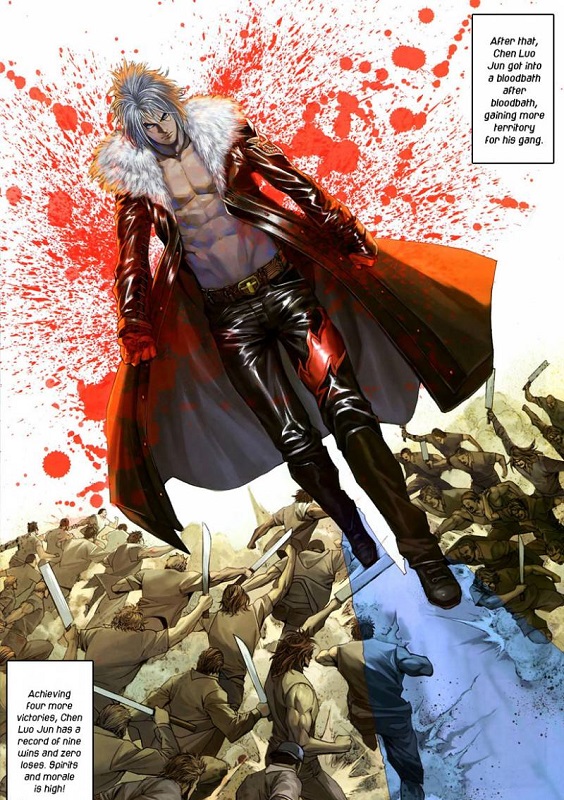
chenluo

The path he walks does not change with the times.

Like other heroes in the genre, Luo Jun experiences tragedy and endures tribulations that make him a better martial artist and more importantly a better person. The streets of Hong Kong are a dangerous place and Luo Jun knows how to survive largely because of his immense skill in battle and charisma. However, he's not an Arrogant Kung Fu Guy trope nor is he a generic shonen hero. He's a simple man who just wants to build a better life for his mother and he's doing so the only way he knows how. He doesn't boast about his power or show off and he's not interested in being rich or famous, but he just wants a better life than what the streets have to offer. He carries himself with a sense of pride, but he's never conceited. He walks his own path and these and other qualities draw others to him and even his enemies admire him. However, he is loyal to a fault and this "flaw" becomes the impetus of the story's conflict because one character who doesn't share Luo Jun's code of ethics is his employer - THE BOSS.


The Boss

THE BOSS

The most powerful crime lord in Hong Kong, indeed the only crime lord in Hong Kong, the Boss has made a name for himself for being cunning, ruthless, and absurdly powerful. He surrounds himself with the toughest fighters in the criminal underworld, but he's not the type to hide behind his men. Wielding fear and respect as a weapon, he'll disappear a guy to make a point and he has no problems getting his hands dirty if the situation calls for it or even if he's just bored. He conquered 18 districts in Hong Kong and if that wasn't badass enough he killed a guy with a durian (a fruit). Luo Jun summed up the Boss quite fittingly: "If the Boss wanted rain he got rain. If he wanted wind he got wind." Power, violence, and deceit are the virtues of the underworld and the Boss thrives in this environment. Faced with such a foe Luo Jun doesn't stand a chance so it's a good thing he meets unlikely allies who join him in his fight.

The Boys2

The Kliq

Luo Jun meets a number of allies who agree to fight alongside him for various reasons. Some of whom have similar goals while others start off as foes, but forge some manner of understanding or mutually beneficial relationship.

Dual
 
Twin Fates

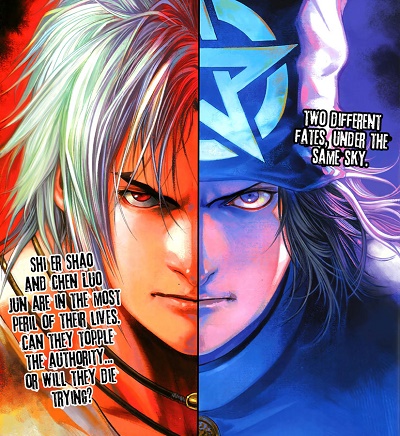
Similar to Luo Jun, Shi Er Shao is a gang leader working under the Boss. When the Boss has one of his violent mood swings, he burns Er Shao's district to the ground and critically injures his friend Jixiang. According to the Boss this event was merely a test, but there's little doubt the Boss is trying to keep the troops in line after Luo Jun's defection. Shi Er Shao does not take kindly to having his friends killed and neighborhood destroyed just so the Boss can set an example and this betrayal strengthens the friendship between himself and Luo Jun.

  Xin Yi

Swim with this loan shark and get eaten.

Xin Yi is Kowloon's resident loan shark and he and Luo Jun start off as enemies. Calculating and professional, Xin Yi is a business man through-and-through and he's as violent as he needs to be, but not ruthless. He has his own code of honor and when the Boss threatens to expand his territory into Kowloon, Xin Yi rises up to protect his community.

AV

Jason Vorhees? Not quite.

Luo Jun and AV meet during a death match and Luo Jun's trip to Kowloon is almost a short one. It's an interesting meeting for both men as Luo Jun quickly finds out the Boss is not the only monster in China while AV is impressed that anyone could survive one of his punches. I won't spoil much, but as we learn more about AV and his past I found him to be one of the most interesting characters in the comic and he quickly became my favorite. He has so much depth and backstory that he could easily be the main character in his own right.

tornado
 
This Tornado travels by Benz.

As you can see the comic is gorgeous. Manhua utilizes a very broad color palette and City of Darkness is head and shoulders above other works in this medium. Everything from tire treads and motorcycle exhaust, to dust and even litter are drawn with loving detail. The artists went to great lengths to ensure that Kowloon in the comic resembles Kowloon Walled City and this shows in the tight alleyways, open living quarters, restaurants, and what passes for parks and gardens in a city cut off from neighboring districts. Characters are drawn with extensive detail right down to the wrinkles and creases in their clothing. The raindrops, skyline, sunset, everything here has a level of polish you don't see outside Chinese comics and you all know how much I enjoy speed lines. The art is a major boon to the fight scenes which are stunning.

intenseaction2
 
Is that... NANTO SEIKEN?!

Martial arts in wuxia stories are based on real martial arts taken to exaggerated heights. Imagine boxers punching through brick walls or practitioners of Heihuquan tearing through cars with their bare hands. It never gets that off the wall, but it has all the mainstays of wuxia such as fighters possessing superhuman strength, endurance, and agility leading to some spectacular fights. The characters have different fighting styles too. Luo Jun is a solid, all-around fighter who knows a variety of styles while AV doesn't have any particular style and is all about brute force. Jixiang and Xin Yi prefer swords, but Shi Er Shao is skilled in both swordsmanship and judo. If there are any flaws in this comic they rear their ugly heads in part two.

City of Darkness 2
 
A fight you won't soon forget.

When I read City of Darkness I could tell it was an absolutely amazing title, but I worried if it could keep its level of polish and momentum forever. In my view it didn't. City of Darkness 2 continues the story a few years after the first part and this is where some of the issues pop up. Many of the characters are out of character in part two and while I do expect them to change and be different after the trials they went through, many of the characters go about their lives as though they didn't learn anything from part one. Characters who sought an escape from the criminal underworld in part one seem to be happy with their lifestyle in part two. This - predictably enough - draws them into some fierce, but unnecessary conflicts. While the colors remain vibrant and the fight scenes are jaw-dropping, characters are noticeably less detailed than they were in part one.

BOSS
 
You don't cross THE BOSS.

Also, there are a lot of names and faces to remember. In part one the conflict was simple: our heroes versus the Boss. However, part two has at least three factions (our heroes and their enemies), gangs under those factions, and several coup d'etat within those gangs. Even as someone who's been with the series since chapter one, this was a lot to keep track of. I feel that part two went a little too big for its own good and this made it fall short of its predecessor's greatness.

Chen Luo v AV
 
If he dies, he dies.

Overall City of Darkness is a superb comic. Despite flaws that show up in part two it is easily the best Chinese comic I've ever read and one of the best wuxia I've read as well. It has a great cast of characters, unbelievable art, and mind-blowing fights. It does a fantastic job of building suspense, exploring the crime life and showing it's never what it's cracked up to be, but also tells an intensely captivating human story of people just trying to survive and find direction in a chaotic world. I highly recommend this comic especially if you're a fan of martial arts and crime drama.

Tuesday, June 21, 2016

Kamen Rider OOO (2010 - 2011)

OOO_Poster

This is going to be a weird one.

Written by Yasuko Kobayashi, Kamen Rider OOO is the twenty-first entry in Toei's long-running Kamen Rider franchise created by Shotaro Ishinomori in 1971. OOO centers on a drifter named Eiji Hino. A tragic incident in his past left him empty and he's returned to Japan in his continuing mission to find a purpose in life. Elsewhere, a pair of thieves break into a museum and remove the seal on an ancient tomb containing metallic creatures known as the Greed. Sealed away eight centuries ago, the Greed create monsters called Yummy that are spawned from human desires and the Yummy start wreaking havoc among the populace. Detective Shingo Izumi is first on the scene, but he is fatally injured by the Yummy. Hino tries to come to Shingo's aid, but he is nearly killed himself. Suddenly, a severed arm calling itself Ankh appears and gives Hino a mysterious belt that turns him into Kamen Rider OOO. As OOO, Hino defeats the creature, but when he returns to the detective he finds that Ankh has taken over Izumi's body. It turns out that Ankh is a Greed whose revival was incomplete. He offers to help Hino destroy the other Greed to save the city if Hino helps him become complete and so begins a long, complicated series filled with intense action and complex emotions.

Greed
 
The Greed
Kamen Rider OOO is from the post-Decade era of the Heisei Kamen Rider entries. I point this out because the post-Decade era Kamen Riders tend to be lighter in tone, have more comedic elements, and some interesting and at times very strange changes to the Kamen Rider formula. When I first saw Kamen Rider OOO, I bailed after the first five episodes because it was so different from what I was used to, but I gave it another go recently and I'm glad I did because it's not until episode seven that the show hits its stride and starts to shine. The gimmick or motif of Kamen Rider is sometimes a major thematic part of the series, sometimes it's only minor. OOO is a case of the former. Medals play a huge role in OOO. As the Greed's themselves are aligned with a particular element so are the medals they need to become complete. This longing, this need to be whole is the major driving force behind the actions of our villains.

fullcombo

Good combo. Good combo.

These same medals are used by OOO to transform and different combinations thereof allow OOO to obtain different forms. OOO can mix and match elements, but a set of three creates a combo which gives him tremendous power in combat. OOO unlocks a number of forms throughout the series and so the fight scenes are always entertaining. Also, the Greed are often at odds with one another so it's not uncommon for infighting to lead to a medal ending up in OOO's possession or in possession of another Greed. The war over these medals is the central conflict and while there's your atypical end of the world looming on the horizon, the apocalypse is also dependent on who controls these medals. We turn to Kamen Rider OOO's characters which are a peculiar mix of the strongest and weakest elements of the series.

Hino Eiji

Hino Eiji/Kamen Rider OOO

Shu Watanabe plays Hino Eiji/Kamen Rider OOO. He has a tragic past, but he has a good nature and he wants to save everyone who might be in jeopardy. Unfortunately, that's essentially all he is. He's your standard good guy. You can insert most other Kamen Riders in Eiji's place and you probably wouldn't miss him. He's not a bad character, there's just little if anything that is unique about him. He often puts himself in dangerous situations due to his messiah complex which the other characters deconstruct over the course of the series in order to try and curve his recklessness, but even that isn't unique to Eiji and is something of a reoccurring character trait for many Kamen Riders. Sure your average Kamen Rider places the needs of others above themselves, but that's what a hero does. They often have other character traits to go along with that. Eiji is essentially a trope and not much else. Fortunately, there is a diverse cast of characters with strong, and at times strange personalities.

Ankh

The beginning of the end.

Miura Ryōsuke pulls double-duty as the phoenix Greed Ankh and as detective Izumi Shingo and he acts circles around the entire cast. Ryōsuke plays two characters whose personalities are at opposite extremes. Shingo is kind-hearted, altruistic, devoted to the people and very loving towards his sister Hina. While Ankh - being a Greed is selfish, violent, angry and relentless in pursuing his objective. Ankh is even more unstable than the other Greed, because he is literally unstable. The other Greed revived in an incomplete state, but with their bodies intact. However, something went horribly wrong for Ankh and he only exists as an arm. The only way he can even survive is in the body of Izumi Shingo who would be dead were it not for Ankh possessing him. Ankh is in a situation where he is not only weakened, but he has to rely on the humans he despises to not only survive, but achieve his ultimate objective.

tumblr_inline_nh5q8z2j4j1rvpl2t

There will be hi-jinks.

The power struggle between Ankh and Hino is a defining aspect of the series. Ankh keeps possession of the medals which Hino needs to transform. Without the medals, the rider belt is essentially useless. Without Ankh Hino doesn't have the means to save people, but at the same-time Ankh doesn't have any way to become complete unless Hino chooses to help him. Both characters use the power of OOO as a bargaining chip which creates some intense conflicts as our hero's greatest foil is also his greatest asset. Easily my favorite character in this series, Ankh is a dangerous wild card throughout. From the very first episode to the last, Ankh is a powerful, wonderfully complex character and Miura Ryōsuke's performance sticks with you long after the series has ended.

kliq
 
Loving through pain.

Model/actress Riho Takada plays Izumi Hina - Eiji's love interest and Shingo's younger sister. While she initially starts off as your annoying (atypical) Kamen Rider female lead, she displays  a lot of depth and personality once she finds out what's really going on. Hina loves her brother dearly and she's heart-broken by what's happened to him and profoundly disturbed by Ankh. While she's initially suspicious of Eiji she gradually develops feelings for him, but this causes her no shortage of pain. She doesn't like seeing Eiji put himself in danger, but she needs him to help Ankh so that Ankh leaves her brother. And while Ankh's very existence unsettles her, Hina needs Ankh to stay with her brother until they can find someway to make Shingo well again. She finds herself using both Eiji and Ankh even though she doesn't want to. Eventually she becomes so attached to them she doesn't want to lose either of them, but she knows she has to.

kamenriderbrotherhood
 
Kamen Rider Brotherhood

Brotherhood is another theme of Kamen Rider OOO and Shintaro Goto (Asaya Kimijima) and Akira Date (Hiroaki Iwanaga) round out the rest of a compelling cast. Shintaro Goto is a former police officer and isn't thrilled that a civilian like Hino is Kamen Rider OOO. Initially it seems as if Goto is an elitist who is jealous of Hino, but this isn't the case. Rather, Goto is concerned that in being untrained and inexperienced Hino might be putting himself and the general populace in danger by playing superhero. Then you have Akira Date (I call him Big Chicago) who is older and wiser than the rest of the cast. Despite his youthful and carefree appearance life has been hard, but his experiences have given him sage-like wisdom. He serves as an older brother figure to the others. He teaches Goto and Eiji not only how to be heroes, but how to be men. He also teaches Ankh to change the way he looks at his situation.

tumblr_njbbh5Tgyj1qjqokvo2_500

I hate it when that happens.

The series isn't perfect. Apart from Ankh the Greed are all your run of the mill tokusatsu villains. You have the mad scientist, the hot head, the manipulator, the weird one, and the token female. Their forms may have changed, but you've seen these villains in other shows. I talked about the medals earlier in the review and this is another issue. The heroes and villains essentially play hot potato with these medals throughout the series and while I understand this was to prevent Eiji from becoming a boring, invincible shonen hero, it does get predictable and even outlandish at times when Eiji unlocks a powerful form, uses it for a few episodes, then loses the medals to the Greed. The tone can be uneven as well. Often times during a tense scene there will be humor inserted at the most inappropriate time. When things get serious there's nothing wrong with lightening the mood, but when a character "dies" and everyone is distraught and that same character turns out to be "just fine and was only kidding" it creates this really weird, uneven tone as though the writers don't know what they want to do with a scene.

OOO_poster2

Jackpot?

Kamen Rider OOO isn't the strongest Kamen Rider series. It has a lot of small problems that add up over-time. Some of the tropes, cliches, and some pacing issues might turn away people unfamiliar with tokusatsu. I had a lot of fun with it after the show hit its stride and the ending really stuck with me. If you've never seen a Kamen Rider series I'd recommend something from the Showa or early Heisei eras as I tend to prefer the old school, but Kamen Rider OOO is still a good time.

Wednesday, June 1, 2016

Super Hero Taisen GP: Kamen Rider 3 (2015)

SHT3

Kamen Rider Fanservice: The Movie

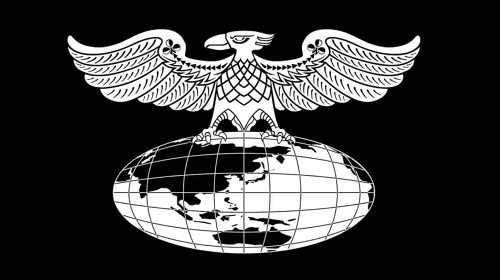
Many years ago the evil mega-conglomerate "SHOCKER" created powerful cyborgs called Kamen Riders in their bid for world domination. Despite being created for nefarious deeds, Kamen Rider 1 (Takeshi Hongo) and Kamen Rider 2 (Hayoto Ichimonji) would become champions of justice and unite their powers to destroy their evil creators. Having saved the world, the two rivals rode off into the sunset. Or at least they were supposed to. After Shocker's demise a fearsome contingency plan was set in motion.

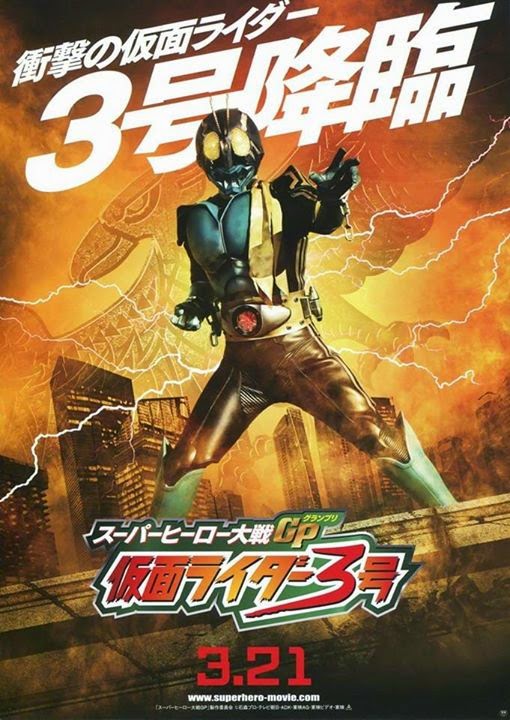
KR3
 
Shocker's Ultimate Rider?

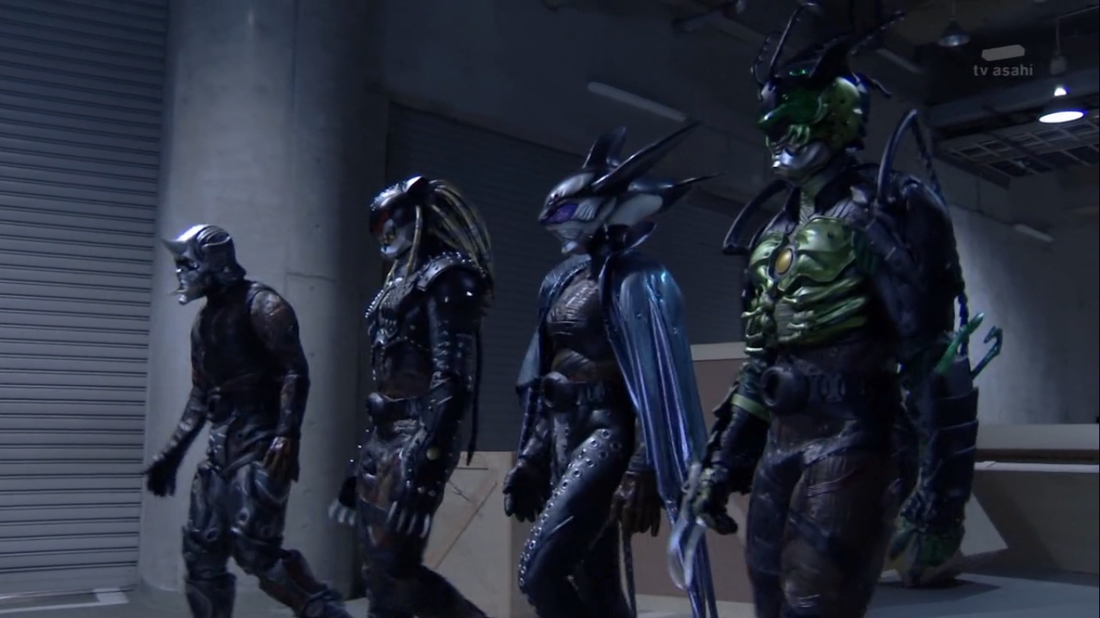
Kamen Rider 3 (Kyoichiro Kuroi) emerged from the ashes of Shocker and set his sights on Kamen Rider 1 and Kamen Rider 2. Even the combined might of two Kamen Riders were no match for this new foe and thus the greatest heroes of all-time were mercilessly killed. Flash forward decades later and during a typical day detective Shinnosuke Tomari AKA Kamen Rider Drive and his partner Kiriko Shijima are working a case when the entire world changes around them. City streets filled with happy families taking care of their day-to-day affairs are replaced by monsters and armies of combatmen. What were clear blue skies are now consumed by Shocker's armada of blimps and fighter planes. The Shocker flag adorns every house and place of business and nothing is as it should be. Something has gone horrifyingly wrong with the timeline and it's up to Kamen Rider Drive to kick into high-gear and set things right.

KRD
 
Buckle up Shocker because Drive is going to take you for a ride.

Super Hero Taisen GP: Kamen Rider 3 is the 2015 entry in the Super Hero Taisen film series. For those who may not know, Super Hero Taisen is a special crossover film that Toei has made each year since 2012. These crossover films typically combine the casts of Kamen Rider and Super Sentai by pitting them against foes that threaten the peace of their shared multiverse. In this case, this foe is Kamen Rider 3. Having murdered Kamen Riders 1 and 2, there was no one to stop Shocker from taking over the planet. In this future Shocker reigns supreme and any rider not on the payroll is hunted down. The odds are stacked against our hero Kamen Rider Drive because he's fighting against a world where the bad guys have already won.

Shocker
 
The bad guys don't win. They've won.

Because of Kamen Rider 3's meddling, Shocker has taken over the world in this timeline and so many of the characters we've come to know and love are morally ambiguous, some are villains, and others are literal monsters who work for Shocker. In this timeline Shinnosuke Tomari isn't a Kamen Rider, rather he's a Shock Rider - one of the guys on the take. Early on he even goes so far as to attack Kamen Rider Black.

Rider_1
 
The Legend

Shocker has a bad habit of picking the wrong people to turn into Kamen Riders, because often times in trying to pick someone who they think can be easily manipulated, they awaken the spirit of justice in their would-be victims and these Kamen Riders take the powers granted by Shocker and turn it against them. Even brainwashed, many Kamen Riders eventually break free because there's something intrinsically good about them. This has always been an intriguing concept throughout the franchise and it has endured for more than 30 years. The Kamen Riders may make mistakes, but they'll always rise to fight against evil because they represent the potential to be a force of good that exists in all human beings. This is why it's always fascinating when you have a heroic rider versus a villainous one because it creates a contradiction in both the ideological and existential nature of what a Kamen Rider is supposed to be.

Drive vs 3
 
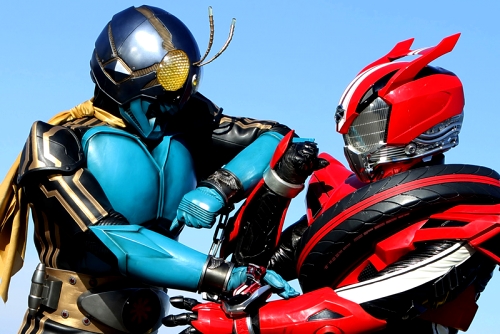
Kamen Rider 3 vs Kamen Rider Drive

Singer, musician, and songwriter Mitsuhiro Oikawa plays Kyoichiro Kuroi/Kamen Rider 3. Every good hero needs a good villain and Oikawa did a great job portraying Kuroi as a character who is at odds with himself. As a Kamen Rider he did the unspeakable and that was slay his own brethren. Brainwashed or not he can never wash the blood of hope from his hands and he constantly struggles with his decisions and how they've affected his ability to move forward. Winston Churchill wrote "If you're going through hell keep going", but it's doubtful if this is the best move for Kamen Rider 3 as each step he takes is paved with the bones of his enemies. How do you change if you're a killer? Can you change? And how do you live if every action you take goes against your nature? These questions define Kamen Rider 3. He and Drive find themselves at an impasse not only because their way of life is so different from one another's, but because of their gulf in age and experiences as well. I felt that casting Oikawa who was 45 at the time was a good choice because in-universe Kamen Rider 3 has been doing this longer than Kamen Rider Drive and he's been witness to and often the cause of tragedies that Drive can't even imagine.

BRx
 
Tetsuo Kurata returns as Kamen Rider Black. Awww yeah!

This film has a massive cast of characters and Tetsuo Kurata (Kamen Rider Black, Kamen Rider Black RX), Yuichi Nakamura (Kamen Rider Den-O), Kousei Amano, Takayuki Tsubaki, Ryoji Morimoto and Takahiro Hojo (Kamen Rider Blade), and Kento Handa (Kamen Rider 555) all reprise their roles in the film. Kamen Riders from Showa and Heisei eras engaged in mortal combat throughout the film and it was great seeing my faves on-screen again. In typical Super Hero Taisen fashion there is a giant free-for-all at the end of the film and this is probably where I lost touch with the film albeit briefly.

itsgoingdown
 
Dial it back. Just a bit.

It pulls a Batman v Superman in that there is way too much going on in the final minutes of the film. While I'm a huge fan of Kamen Rider and somewhat of a fan of Super Sentai the combination of the two in the final act was too much. A minor-spoiler, the riders are in trouble and it looks like it might be the end for Kamen Rider Drive and literally out of nowhere the cast of Shuriken Sentai Ninninger walks onscreen. The rational for Shuriken Sentai showing up is literally "Hey Drive. You're cool. We're cool. Let's fight together" and I could not fire off enough Jackie Chan memes to express my "what even" at this part of the movie. Is the team-up cool? Absolutely. But it took an already long action sequence and just made it chaotic. There's also an event that happens which has implications for Kamen Rider Drive and sets up the sequel Kamen Rider 4. Again, way too much was going on in the final act and I feel if the movie just cut the last action sequence it would have had a more memorable ending.

SHT3GP

"Who's That Guy?"

As you can see the film has its flaws, but those are mostly in the last few minutes and up until that point what's here is a very well-choreographed, well-acted, well-written tokusatsu. I enjoyed seeing Kamen Riders gathered together to do battle against their foes (and each other) and there were several twists that kept me guessing. Mitsuhiro Oikawa did a great job as Kyoichiro Kuroi/Kamen Rider 3 and the character really left an impression on me which is no mean feat for a character making his debut in a film filled with recognizable Kamen Riders. Oikawa also performed "Who's That Guy" - the main theme of the film. Newcomers will be understandably lost, but may still latch onto all the intense Kamen Rider action while long-time fans will find a flawed, but enjoyable experience.

Friday, May 27, 2016

Mechanical Violator Hakaider (1995)

destroyhakaider

If this peace is fictitious I shall destroy it.

In a distant future, war has reduced human civilization to an irradiated wasteland. For many decades people struggled to survive in a world where Man lives by his base instincts. Until a being named Gurjev (Yasuaki Honda) descended to Jerusalem. Seraphim in appearance, but with a nature belying something else entirely, Gurjev along with his android disciple Michael (Kazuhiko Inoue) ushered in a utopia with advanced technology and equality. This angelic socialist renamed Jerusalem to Jesus Town and brought all mankind together. All seems right in the world until adventurers uncover a prison confining a terrible menace. Hakaider (Dai Matsumoto), the one who destroys to bring justice has awakened. Blazing a trail of unspeakable carnage he heads toward Jesus Town to burn it to ash. What is Hakaider seeking? What is the reason behind this violence? Who is to say there is one?

Hakkaider
 
90s Japanese box art!!!!

Created by Bandai and Toei, and directed by Keita Amemiya (GARO, Kamen Rider, Onimusha), Mechanical Violator Hakaider was released in Japan in 1995 and is a spin-off of the Android Kikaider series created by the father of Kamen Rider Shotaro Ishinomori. In the original Kikaider series, Hakaider is actually the villain and is something of the Cain to Kikaider's Abel. However, Hakaider became so popular in his own right that he earned his own toy line and movie. And what a BADASS movie it is. Normally I shy away from live-action adaptations and re-imaginings, but let me tell you that Mechanical Violator Hakaider is one of the best. True the movie doesn't tie into the Kikaider series and in fact, Hakaider is the only commonality between this film and the source material. Everything else from the setting to the tone, to the action and characterization are quite different. This is a post apocalypse, but while most of the world has been destroyed, there's an unsettling sense of routine, of easiness about the whole affair. The people of Jesus Town are happy and everyone is equal in that "this is not what nature intended" way that only happens in a dystopia. The people feed on Gurjev's every word and regardless of race or gender everyone behaves like sheep and are even dressed in white. Gurjev even refers to the people as his children and even his arc android worships him. The set-up is so disturbing it's fantastic.

Hakaider
 
A look that will make your blood run cold.

Who is to say we're better off with our "hero?" Hakaider is not one of the good guys. On his best day he's an anti-hero, but he seems closer to a villain protagonist. Hakaider was sealed away for a reason and when he's unleashed you better hide or get the hell out of his way. Hakaider leaves a pile of bodies wherever he goes and he's almost unstoppable. Everything about him from the way he moves to the way he fights is very imposing and while his human guise isn't as overtly unsettling, you can still feel something powerful behind it. Maybe Hakaider's backstory indicates there's more to him than murder. Maybe he's just a ruthless killing machine and the future is filled with people who need killing. Even after watching the film I can't really say for sure.

habike
 
Motorcycles are forever.

If you're at all familiar with Keita Amemiya's work (GARO, Kiba Gaiden, etc.) you know he's a fantastic director that makes superb use of practical effects and minimalist acting. There's only one brief scene where computer animation is used, but the entirety of the action scenes use old school movie magic: pyro, blanks, dummies, stop motion, hotblooded stuntmen, camera tricks and so forth to draw you in. It's a different experience from today's CG fests. You really feel like you're screeching down a highway in a race of life or death or staring down Gurjev's robosapien minions in a dark, decrepit alleyway. There's so much 90s badassery that even Hakaider's motorcycle looks ominous. There is a rebel group (isn't there always) that seek to bring down Gurjev and while they're mostly here for exposition, they all had different personalities and habits that defined them.

hakaidervision
 
Gorgeous cinematography.

Kaoru (Mai Hosho) the leader of the rebels is a particularly interesting character who has visions of the future. The message behind these visions are open to interpretation. These scenes are short, but there is a lot of fantastic imagery here including chains, crosses, wings, and an enigmatic black knight. This is the part of the review where I tell you the film isn't perfect.

HakaCV
 
Not perfect, but close enough.

The film isn't perfect. Some of the techniques are dated. The film is more than 20 years old after all and if 90s movies aren't your thing this one probably won't win you over. The last-last battle does feel unnecessary in that BvS kind of way, and Kaoru's visions while interesting often appear out of nowhere. Distribution wise I should note the film is a bit difficult to find, curious as four different versions were released. There's a Japanese VHS, an English VHS, a Japanese DVD Director's Cut, and an English DVD Director's Cut. From what I've found the only way to get Mechanical Violator Hakaider is in a set. The film is only 80 minutes long which is fine for an action movie. It doesn't make any big promises it can't keep, it gets you in and out, and it leaves you wanting more in a good way. You won't find a perfect action movie, but you'll find a very entertaining and often overlooked toku classic.

Mechanical Violator Hakaider on Amazon.